TL;DR: Eggshell is the best all-around paint sheen for apartment walls. It hides imperfections, cleans up easily, and works in most rooms. Use flat or matte on ceilings, satin in kitchens and bathrooms, and semi-gloss on trim and doors. The right sheen depends on your apartment’s wall condition, natural light, and how much wear each room gets.
For most apartment walls, eggshell is the finish we recommend nine times out of ten. It strikes the perfect balance between hiding wall imperfections and holding up to everyday life. It’s durable enough to wipe clean, but it won’t bounce light around the room and highlight every crack, patch, or uneven spot on older walls.
That said, picking one sheen for your entire apartment is a mistake we see all the time. Different rooms deal with different levels of moisture, traffic, and wear. Kitchens and bathrooms have completely different demands than a bedroom or hallway. Below, we’ll break down which sheen to use in every room, explain how each finish performs on common apartment wall types, and share the mistakes we see most often.
What Is Paint Sheen and Why Does It Matter in an Apartment?
Paint sheen is how shiny or reflective a paint finish looks once it dries. It ranges from completely flat (no shine at all) to high-gloss (almost mirror-like). The main sheens you’ll see at the paint store are flat, matte, eggshell, satin, semi-gloss, and high-gloss.
Here’s the thing most people don’t realize: sheen isn’t just about looks. It directly affects how durable the paint is and how easy it is to clean. Higher-sheen paints contain more resin, which makes them tougher and more washable. Lower-sheen paints have more pigment, which gives richer color but makes the surface softer and harder to scrub.
In an apartment, this tradeoff matters more than it does in a house. Walls tend to be older, with more patches, skim coats, and texture variation. A finish that’s too shiny will highlight every bump. A finish that’s too flat will scuff and stain in tight hallways where bags bump against the walls constantly. Getting the right balance between matte and satin finishes is one of the most important decisions in any apartment paint job.
Sheen also changes how color looks on the wall. The same color in flat will appear deeper and more saturated than it does in satin. In smaller, darker apartments, this difference is noticeable.
What’s the Best Paint Sheen for Apartment Walls?
Eggshell is the best paint sheen for most apartment walls. It has just enough sheen to be wipeable without showing every flaw in the wall surface. For living rooms, bedrooms, dining rooms, and hallways, eggshell gives you durability and a clean look without the shine.
We use eggshell on the majority of our apartment projects, and there’s a good reason it’s become the industry standard. It reflects roughly 10 to 25 percent of light, which is low enough to disguise minor imperfections but high enough to resist scuffs and stains better than flat paint. When a scuff mark shows up on an eggshell wall, you can usually wipe it away with a damp cloth. Try that on a flat-painted wall and you’ll end up with a shiny spot where you rubbed the finish off.
For bedrooms specifically, you can also go with matte if you want a softer, more velvety look. Matte sits just below eggshell on the sheen scale and does a beautiful job with deeper, richer colors. It’s slightly less durable than eggshell, so it works best in rooms that don’t get heavy traffic or frequent touches.
One situation where we’ll bump the walls up to satin: high-traffic hallways and entryways. In many apartments, the hallway takes a beating. It’s narrow, people brush against the walls carrying groceries, and kids run their hands along them. Satin holds up better here. It’s more washable and resists marks, which means the paint job lasts longer. If you’re curious about the difference a fresh paint job makes, the transformation is often dramatic.
Which Paint Finish Works Best for Kitchens and Bathrooms?
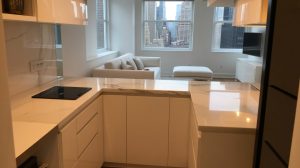
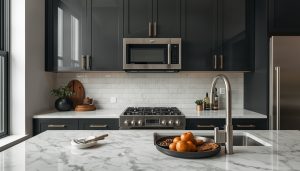
Satin or semi-gloss. Both finishes resist moisture and clean up easily, which is exactly what you need in rooms that deal with steam, splashes, and cooking grease. We lean toward satin for walls and semi-gloss for areas directly behind the sink or stove.
Kitchens and bathrooms are the toughest environments in any apartment. Steam from the shower coats bathroom walls regularly, and kitchen walls near the stove collect grease over time. Flat or eggshell paint can’t handle this. Moisture gets absorbed into the softer finish and eventually leads to peeling, bubbling, or mold.
Satin paint has enough resin to create a harder surface that repels moisture instead of absorbing it. You can wipe down satin walls with a sponge and mild cleaner without damaging the finish. For most kitchen and bathroom walls, satin is the sweet spot: durable and moisture-resistant, but not so shiny that it looks out of place.
Semi-gloss takes the durability up another notch. We typically reserve it for the backsplash area behind sinks and stoves (if there’s no tile), bathroom walls in smaller apartments where steam really concentrates, and the interior of closet shelves. It’s easier to clean than satin and handles moisture even better, but it shows more surface imperfections.
One tip we always share with clients: if your bathroom doesn’t have an exhaust fan (common in older apartments), going with satin or semi-gloss on the walls isn’t optional. It’s essential. Without proper ventilation, moisture sits on the walls after every shower, and lower-sheen paints just can’t hold up.
Trim, Doors, and Ceilings: Matching the Right Sheen
Getting the sheen right on trim, doors, and ceilings is where apartment paint jobs really come together or fall apart. Each surface has a different job, and they each call for a different finish level.
Ceilings should almost always be flat or ultra flat. Ceilings catch every bit of overhead light, and any sheen at all will reflect it unevenly. That makes imperfections, roller marks, and patched areas painfully obvious. Flat paint absorbs light instead of bouncing it around, which gives the ceiling a smooth, uniform look even if the surface underneath isn’t perfect. We use flat on nearly every apartment ceiling we paint.
Trim and baseboards do best in semi-gloss. Baseboards get kicked, scuffed, and bumped constantly. Door frames get touched hundreds of times. Semi-gloss holds up to all of that and cleans easily with a damp rag. It also creates a subtle visual contrast with the walls. When you paint walls in eggshell and trim in semi-gloss, the slight difference in sheen adds depth and definition to the room without being flashy. We’ve written about the details of painting trim after walls are done, and proper sheen selection is a big part of getting that crisp, finished look.
Doors follow the same logic as trim. Semi-gloss is our go-to because doors are high-touch surfaces that get opened and closed dozens of times a day. Fingerprints, smudges, and scuff marks are inevitable, and semi-gloss lets you wipe all of that off. Some designers go up to high-gloss for a dramatic, lacquer-like effect, but that requires extremely smooth surfaces and careful application.
How Does Sheen Look on Old Plaster or Textured Walls?
Higher sheens highlight texture and imperfections. If your apartment has old plaster walls, skim-coated surfaces, or uneven patches, stick to eggshell or matte on those walls. Anything shinier will make every bump and ridge visible.
This is one of the biggest mistakes we see in pre-war apartment buildings. Someone picks satin or semi-gloss for their living room walls because they want something durable. But once the paint dries, every imperfection in the plaster lights up. Old plaster walls are almost never perfectly smooth. They’ve been patched, skim-coated, and repaired many times, and each repair leaves slight texture differences that a reflective sheen highlights.
Eggshell does a much better job on these surfaces. It has enough sheen to be practical, but it doesn’t bounce enough light around to highlight texture issues. Matte is even more forgiving and works beautifully on plaster walls that have character and history.
There is one exception. If you’ve invested in having your walls professionally skim-coated to a smooth, level-five finish, you can go higher on the sheen scale. But on typical apartment plaster that hasn’t been fully resurfaced, keep it at eggshell or below.
Walls with heavy spackling or visible patch jobs follow the same rule. Even if you sand patches smooth, there’s often a slight texture difference between the compound and the surrounding wall. Low-sheen paint helps blend those differences. High-sheen paint makes them stand out.
Can You Paint a Different Sheen Over the Existing One?
Yes, but preparation is key. You can paint eggshell over semi-gloss, satin over flat, or almost any combination. The important thing is proper surface prep, especially when going from a higher sheen to a lower one.
This comes up constantly in apartments. The previous tenant or the building’s maintenance crew painted everything in semi-gloss, and now you want a consistent eggshell throughout. That’s completely doable.
When going from a glossy finish to a lower sheen, you’ll need to lightly sand or degloss the existing paint first. Glossy surfaces are slick, and new paint won’t grip properly without some tooth for it to grab onto. A quick scuff with 150-grit sandpaper or a liquid deglosser does the job. We’ve covered this process in detail in our guide on painting eggshell over semi-gloss.
Going the other direction (lower sheen to higher sheen) is easier. Flat and eggshell surfaces already have enough texture for a satin or semi-gloss topcoat to stick. You’ll still want to clean the walls thoroughly and prime if the color change is dramatic, but heavy sanding usually isn’t necessary. We’ve also tackled the specifics of painting flat over semi-gloss if you’re making that particular switch.
One pro tip: when changing sheens, always use a separate primer. Even if the label says “paint and primer in one,” a dedicated primer gives better adhesion and more consistent sheen across the finished wall.
Common Sheen Mistakes We See in Apartments
After years of painting apartments across Manhattan, we’ve seen the same sheen mistakes come up again and again. Here are the most common ones and how to avoid them.
Using flat paint in hallways and entryways. Flat paint looks great when it’s fresh, but apartment hallways take serious abuse. Within a few months, you’ll have scuff marks, handprints, and scrapes that you can’t wipe off without damaging the paint. Use eggshell at minimum. Satin is even better for narrow, high-traffic hallways.
Going semi-gloss on all the walls. We’ve walked into apartments where the previous painter used semi-gloss everywhere. The walls look plasticky, and every flaw is magnified. Semi-gloss belongs on trim, doors, and moisture-heavy areas.
Mixing sheens on the same wall. This usually happens during touch-ups. Someone patches a spot and touches it up with leftover paint. If the sheen doesn’t match, you’ll see a visible difference when light hits the wall, even if the color is identical. Always touch up with the same product and sheen.
Ignoring sheen when matching apartment paint. If you’re trying to match existing paint in your apartment, getting the color right is only half the battle. The sheen has to match too. A perfect color match in the wrong sheen will stick out just as much as a wrong color.
Choosing sheen based on the paint chip alone. Paint chips at the store don’t show you how sheen performs on your walls. A satin chip looks smooth on the display rack but can look completely different on a bumpy, textured apartment wall. Always test a small area first.
Ready to Get the Perfect Finish?
Choosing the right sheen for every room in your apartment makes the difference between a paint job that looks polished and professional and one that highlights every flaw. Start with eggshell for most walls, step up to satin or semi-gloss in kitchens, bathrooms, and on trim, and keep your ceilings flat for a clean, uniform look.
If you want a flawless result without the guesswork, Soho Painters can help. We specialize in apartment painting across Manhattan and know how to handle every type of wall surface, from pre-war plaster to modern drywall. Our team also handles full interior painting projects of all sizes. Get in touch to schedule a free estimate and let’s get your apartment looking its best.